
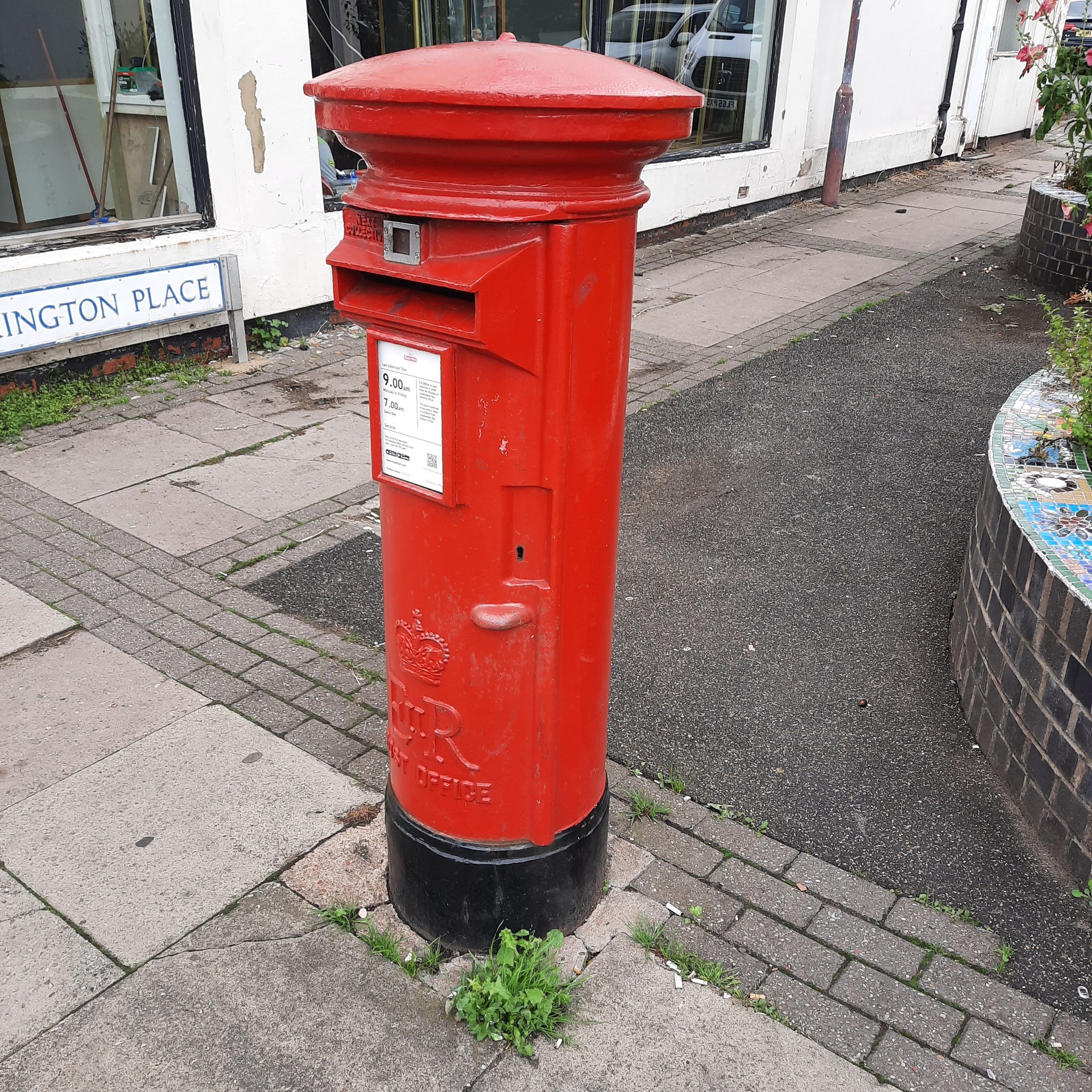
Pillar box, pattern Early Victorian, First National Standard. Montpelier Road, Hove.
Beginner notes for contributors who are adding or correcting map entries.
Use this page with the add or edit flow. If you are unsure of the form, start with quick identification workflow, then work through the examples and tips in the sidebar.
Each subtype has a photo where we have one: PostboxMap contributor images first, otherwise a credited stock shot. Pick form and subtype, then reign from the royal cypher when you can read it.
Need the full pattern and subtype catalogue on one page? Open the enthusiast guide.
If you are unsure what box you are looking at, start here. Answer in order, then pick the form in the add-postbox flow and narrow the subtype.
Then use the form examples, type tips, and field checklist below, and match the royal cypher when you can see it.
Think something here is wrong or out of date? Contact us. We welcome corrections and clearer field notes.
Use this page as a field guide to identify UK postbox types when you map them: form, subtype, and royal cypher postbox dating. It also covers registration numbers on the collection plate. It supports pillar box identification (UK), wall box types (UK), lamp box types (UK), Ludlow-style fronts, parcel and business cabinets, and Victorian postbox identification where it helps you pick the right subtype.
Pick the form first, then the subtype in the dropdown. Contributor examples link to a map listing; stock photos are labelled and linked to the source. Parcel postbox and Business box share one section below (same cabinets; two dropdown options). Pillar Type A/B/C and wall Type A/B/C are different forms: cylindrical pillars are under Pillar box; cast wall boxes (including Type A, B, and C wall box) are under Wall box. Under each form, the pattern and subtype list matches the full dropdown.
Freestanding roadside postboxes: most are cylindrical, but named designs sit outside the standard cylindrical pattern list. Identify pattern first, then subtype, then cipher. Type L and Type M Royal Mail sizes are pedestal-mounted boxes: use form Pedestal box, not Pillar. Introduced in the Channel Islands (1852); mainland standard pillars from 1853. Introduced 1852.
Most pillars are cylindrical, but several important named designs sit outside the standard cylindrical pattern list. Identify the pattern first (dropdown group), then the type, then the cypher. Photos below are curated examples plus Reference · … stock images; use Unknown when you cannot match confidently.
Standard cylindrical pillar patterns
Main traditional cylindrical designs (pattern Standard cylindrical pillar patterns): Type A, Type B, Type C, and Type K.
Pillar type letters are collector shorthand in postal-history writing. They do not form a continuous official Post Office sequence. Some letters name specialised or experimental patterns rather than standard cylindrical pillars. Always match shape first, then confirm the type.
Type L and Type M in Royal Mail sizing are pedestal boxes: use form Pedestal box, not Pillar.
1931 oval vending-machine pillars
Type D (large oval combination) and Type E (small oval combination), with integrated stamp vending machines. Pattern 1931 oval vending-machine pillars. Reference photos in the grid (PB29/PB30).
Modern engineering pillars
Pattern Modern engineering pillars: Type G and Type H (Double G) (cast iron family). Type K sits under standard cylindrical patterns, not modern engineering.
Special pillar patterns
Liverpool Special (square-section Liverpool district pillar; pattern Liverpool Special). Penfold pillar, Fluted pillar (early fluted column), Anonymous pillar (Type A / B), Scottish and Irish pillar types, experimental hexagonal types, and Earliest mainland standard pillars (First / Second National Standard) in their own pattern groups.
Include Type B Nigerian pattern under standard cylindrical pillars when the casting matches the Nigerian export family later installed in the UK.
Pillar box, pattern Early Victorian, First National Standard. Montpelier Road, Hove.

Pillar box, Type A, Croom's Hill Grove, Greenwich
Emma H · Map listing

Pillar box, Type B, Sydney Road, Leigh on Sea
Keepmepostboxed · Map listing
Type B Nigerian pattern from the Carron export mould family; some were installed in the UK. Cylindrical pillar with domed cap, High Street, Royal Leamington Spa.
Chris Hughes · Map listing

Cylindrical pillar (form: Pillar box), Type C, dual aperture. Ryknild Street, Lichfield. Not the same as a Type C Wall Box.

Pillar box, Type G

Pillar box, modern engineering pattern: Type H (Double G)

Pillar box, Fluted pillar pattern (Smith & Hawkes fluted column)

Pillar box mounted indoors, Kerbey Street, Greater London
Emma H · Map listing

Reproduction Standard Penfold pillar, Newhalls Road, City of Edinburgh

Pillar box, Type K early (1980–mid production; short cylindrical run)
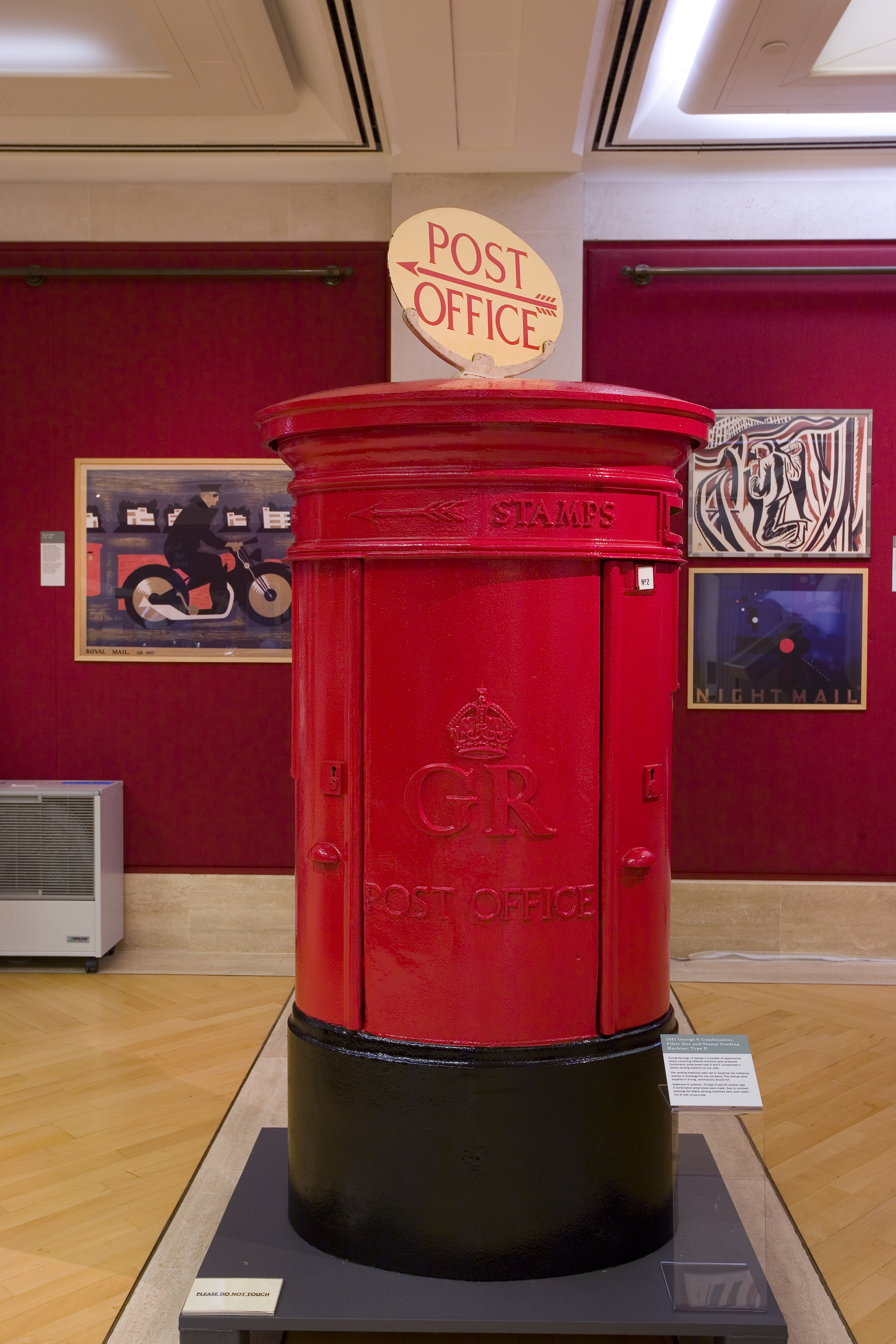
The larger 1931 oval combination pillar with an integrated stamp vending machine at one end (often linked to PB29). In specialist writing, Type D and Type E usually refer to these oval machines (PB29 and PB30), not to cylindrical subtypes. Published production totals for D vs E vary between sources; treat numbers as provisional.
Photo: British Postal Museum & Archive via Wikimedia Commons (CC BY-SA 2.0)
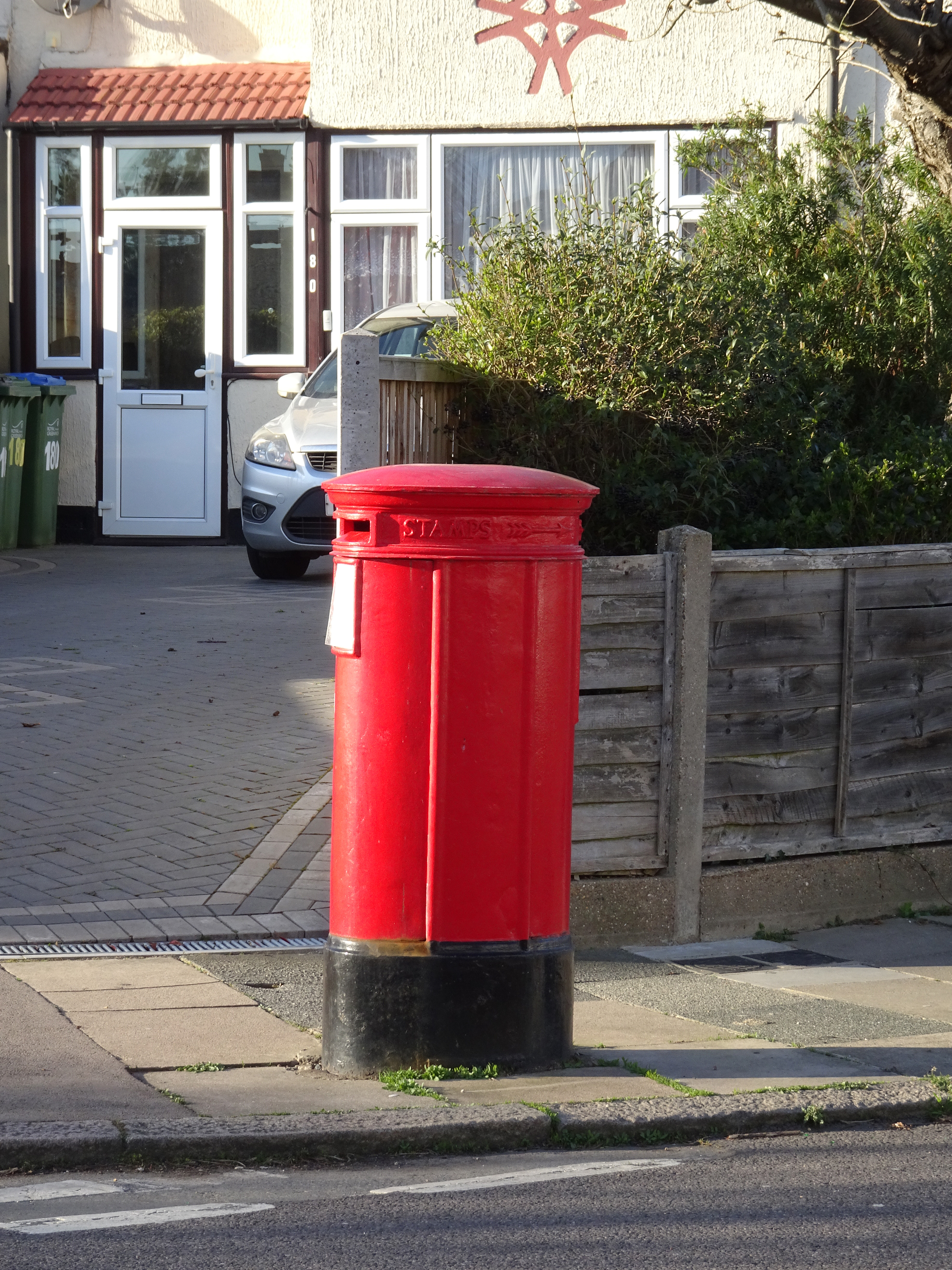
The smaller 1931 oval combination pillar with integrated stamp machine (often PB30). Surviving street example (Woolwich). Same letter clash as for Type D: choose pattern 1931 oval vending-machine pillars, not standard cylindrical. See also the Commons category of George V type D/E oval boxes.
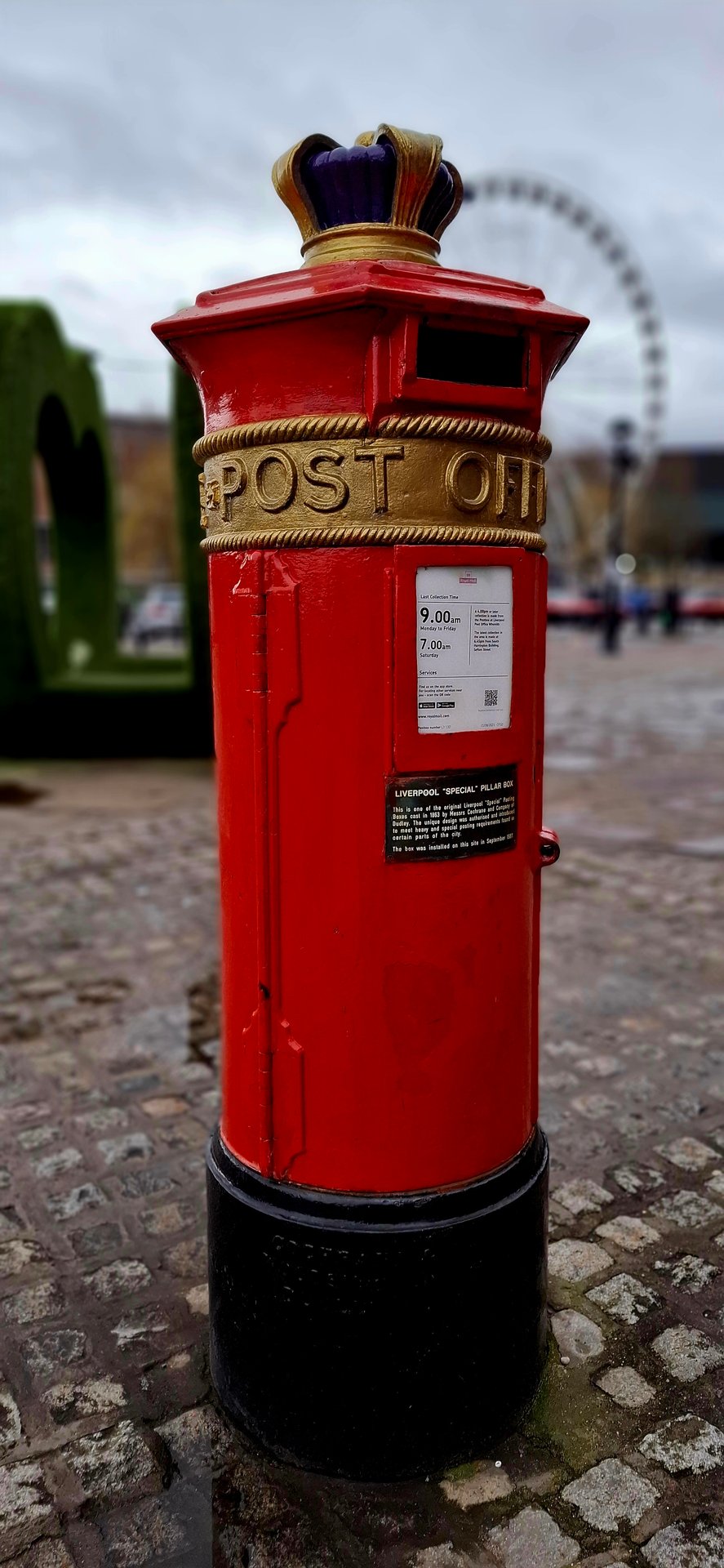
Post box of the type in use in Liverpool in 1863 (heritage wording). Cast iron: cylindrical body with plinth, horizontal slot, “POST OFFICE” in raised lettering, crown-topped cap. Salthouse Quay, Liverpool. Select pattern Liverpool Special and subtype Liverpool Special.
Authority: Historic England list entry 1292279 (Grade II) · Royal Mail and Historic England joint policy statement (July 2015)
DM · Map listing
Freestanding boxes on a pedestal base (including Royal Mail types L and M). Distinct from a full in-ground pillar box. Introduced unspecified.

Pedestal Type L example from the map

Pedestal Type M example from the map
Small box on lamp posts, poles, or sometimes set in a wall. Lamp rows use LB2xx pattern names aligned with common supplier numbering. Introduced 1896.
Lamp box silhouettes
Beginner-first view: use the five examples below to choose a broad lamp family, then open the image for a deeper subtype page.
Deep dive for enthusiasts: Lamp box subtype guide. The main identification guide intentionally keeps only broad styles.
Wall mounting: Lamp boxes are often photographed on posts or poles, but they can and often are fixed into a wall opening. If the casting is a lamp pattern (LB family in this app), record Lamp box, not Wall box, even when brick or stone surrounds the plate.
Lamp subtypes in the app use LB… codes (supplier-style numbering), not wall-style size letters. The five examples above are broad families; open the lamp subtype page for the full LB list.

Rounded loaf roof profile.

Elliptical roof profile.

Compact bantam lamp box family.
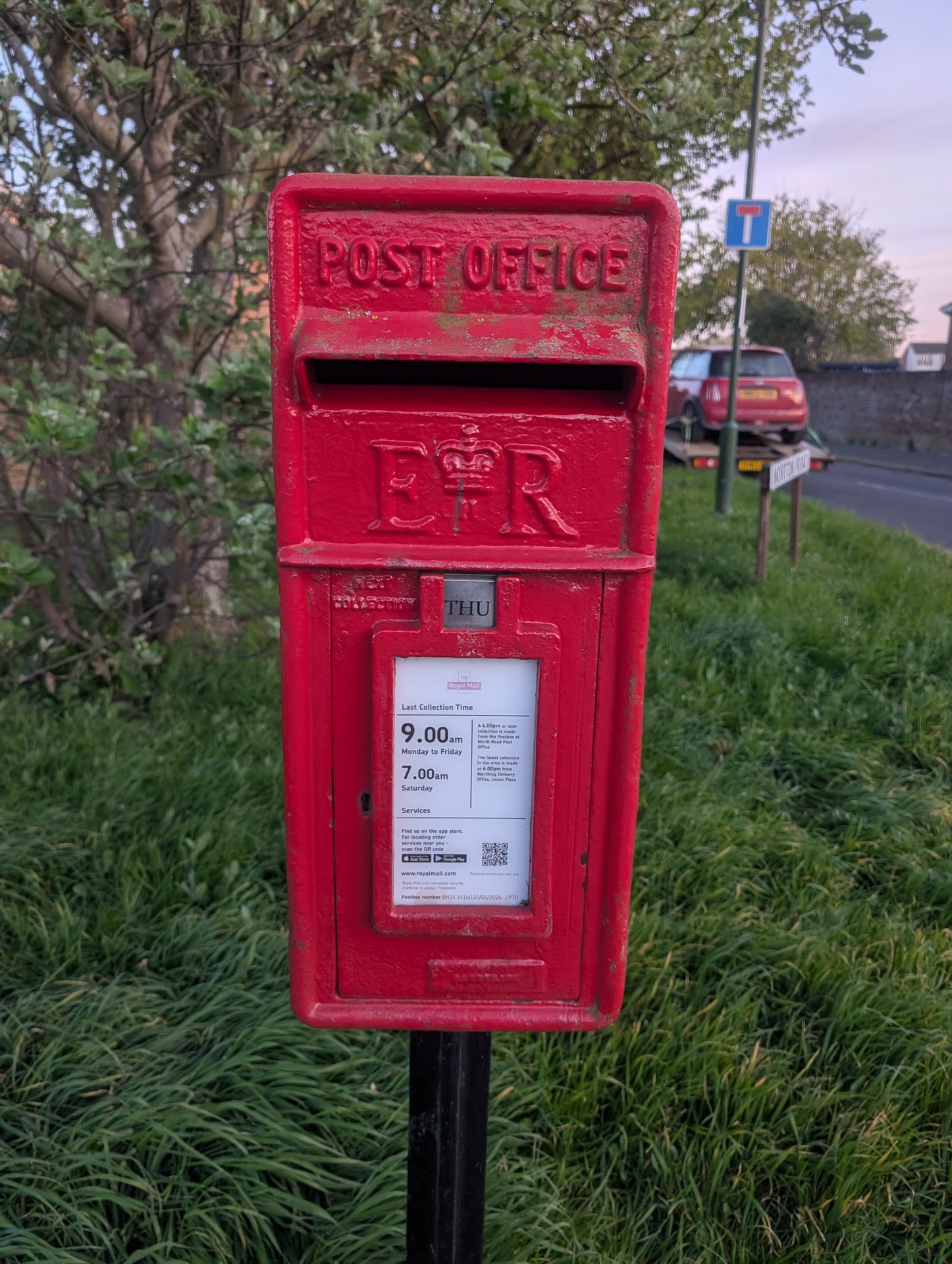
1940 pattern rectangular family.
8bitBob · Map listing

Modern flat-sided lamp boxes.
Set into a wall or sometimes a free-standing pillar. Wall box sizes A–F follow conventional UK cast wall box lettering and manufacturer sizing; they are not pillar type letters. Introduced 1857.
Examples below include pattern Early Victorian: First National Standard and Second National Standard (1857–1859 wall designs), then Type A Wall Box, Type B Wall Box, and Type C Wall Box (cast boxes set into masonry; not the same as pillar Type A/B/C).
Wall box identification hints (sizes A–D in the app): PostboxMap lists Type A through Type D Wall Box in the dropdown. Collector literature also describes larger Type E cast wall sizes; those are not a separate subtype value here, so choose the closest match or Unknown. These hints are visual rules of thumb only; casting varies by era and foundry. Type A often has a smaller aperture surround relative to the front plate. Type B can read as a deeper casting or heavier moulding around the door. Type C often shows wider frame proportions on the front. Type D is commonly read as an intermediate cast size and proportion between the earlier small and larger later wall families. Type E in field guides usually denotes larger-capacity or wide-format wall installations: use photos and the pattern list together; when uncertain, prefer Unknown.
Letters A–D here match conventional cast wall box size labels. Collector literature often extends to E and F; those are not separate subtype values in PostboxMap yet, so use the closest type or Unknown. They are not Royal Mail product codes and are not the same letters as pillar types.
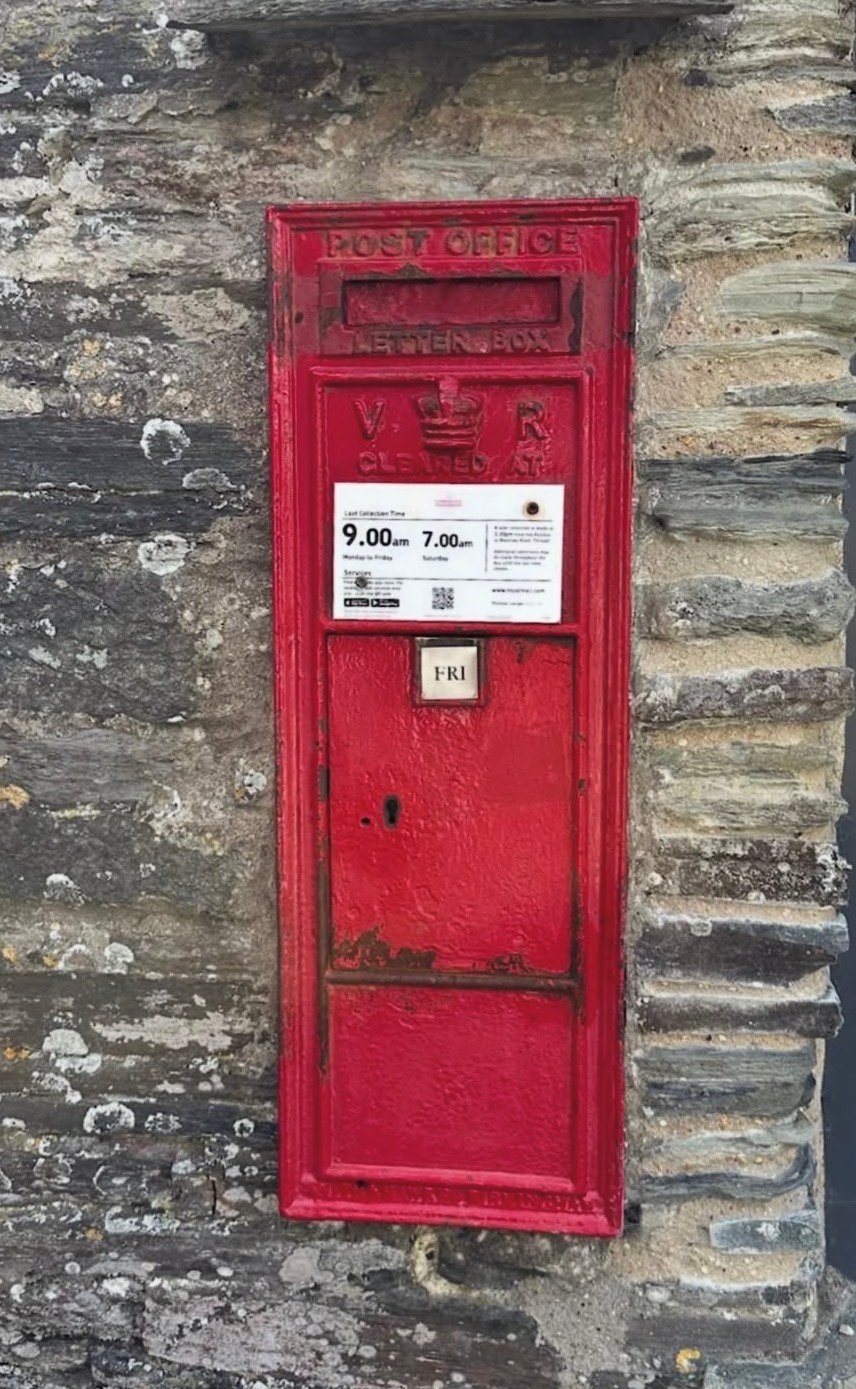
Wall box, First National Standard example, Fore Street, Tintagel.

Wall box, pattern Early Victorian, Second National Standard (1859 revision). Same family as First National Standard with detail changes in the casting. B3227, North Devon.
Keepmepostboxed · Map listing

Wall box, Type A Wall Box, Mosley Street, Manchester city centre
marxistnarnian · Map listing

Wall box, Type B Wall Box, The Green, Bonehill
Angella · Map listing

Wall box (form: Wall box), Type C Wall Box, Dartbridge Road, Buckfastleigh, Devon. Different from cylindrical pillar Type C.
Keepmepostboxed · Map listing
Image placeholder, verified photo pending
Placeholder: image pending. Type D Wall Box example will be added when a confirmed photo is available.
Photo: Placeholder
Recessed wall box with a cast front plate and separate wooden or steel back box. 'Ludlow' is used generically for this family. Introduced 1885.
Ludlow-style boxes use a cast iron front plate with a separate wooden or steel rear chamber set inside the wall. They were widely used where a full cast wall box was unnecessary or too expensive, including many villages and smaller sites; replacement fronts often reuse the same opening.

Ludlow wall box (Pattern Wall, cast front), Queen Victoria cypher. Kingsgate Street, Winchester. Listed manufacturer E. Cole.
postboxesofinsta · Map listing
Royal Mail large street cabinets for parcels and franked / meter mail. The same physical units are listed in the app as Business box or Parcel postbox; pick the form that matches the listing. Introduced 1994 (business-era cabinets). Parcel-only wording and locations vary; this is one equipment family, not two different box types.

Royal Mail large street cabinet (same family as Parcel postbox), meter mail pouches
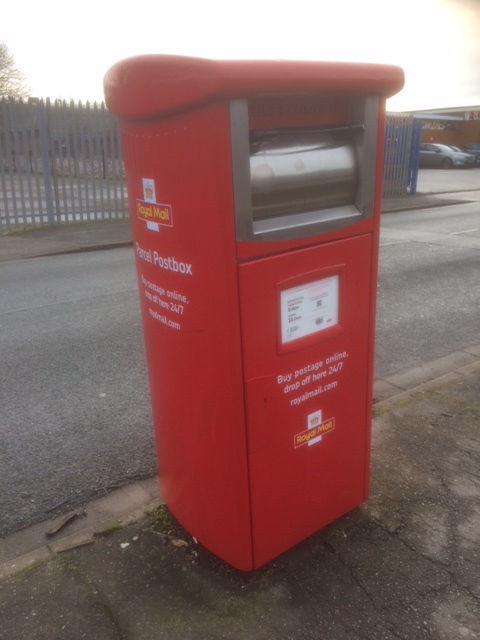
Royal Mail large street parcel cabinet (same equipment family as Business box), illustrative stock photo.
Among standard cylindrical pillars, Type A is wider and Type B is narrower; height alone is a poor guide.
The hug test and other pillar checks are spelt out in Quick field recognition (same page, below).
Slot shape and position are not a substitute for cypher and subtype, but they are strong dating clues when combined with photos.
Foundry or contractor names and marks help confirm era and pattern when the subtype is unclear. Look for cast or stamped text on:
Names you may see include (not exhaustive): Carron, Machan, Lion Foundry, McDowall Steven, WT Allen. Partial text still helps narrow the casting family when paired with photos.
Elizabeth II lamp lettering and branding evolution are summarised on external references such as CVPHM: Elizabeth II lamp letter boxes.
Pillar type letters are collector shorthand. The examples grid includes Reference · … stock photos for unusual patterns. Many rare pillars need good photos; use Unknown if unsure.
Type D and Type E appear only under pattern 1931 oval vending-machine pillars: large and small oval combination boxes (PB29/PB30). They are not cylindrical subtypes.
Penfold pillars are hexagonal with decorative panels and finials (pattern Penfold in the form). Other hexagonal experimental or special castings use different pattern names; rely on photos and the pattern list rather than guessing from silhouette alone.
Bantam entries are compact late-20th-century lamp boxes (e.g. LB224 Type N Bantam), often mistaken for small pedestals. Look for a swept top profile, small body, and pole mount rather than a pedestal plinth.
In Scotland, many postboxes carry the Crown of Scotland instead of E II R (see the reign table). Under pattern Scottish pillar, use subtype Scottish pillar when the casting matches Scottish pillar production; pair with Scottish Crown cypher in the field where applicable.
Lamp boxes are often wall-mounted: the same LB castings sit in wall openings as well as on poles. They stay Lamp box in the map when the front is a lamp pattern, not a conventional cast wall box type. Lamp casts often have rounder corners; standard wall fronts in masonry surrounds are usually sharper. Use the casting family and subtype list, not only the fact that brickwork surrounds the plate.
Type L and Type M read as large and medium on the front casting. This form covers Royal Mail pedestal families only; choose Pedestal when the box is a short rectangular cabinet on a plinth, not a full in-ground pillar.
If the box is a full cast pillar in the ground, form is Pillar, not Pedestal.
Next to the slot, the collection plate frame can hint at era: a thin frame often suggests an older installation; a thick universal-style frame is often seen on post-1980 replacement plates. Use as a clue only, with cypher and subtype.
Use the cypher on the door or plate to pick the reign when you add or edit a postbox. Common UK marks: VR (Queen Victoria), E VII R (Edward VII), GR (George V), E VIII R (Edward VIII), G VI R (George VI), E II R (Elizabeth II), CR or C III R (Charles III). In Scotland many boxes show the Crown of Scotland instead of a monarch cypher: choose Scottish Crown where that matches what you see.
More detail: Royal cyphers guide.
On PostboxMap the field is reg no (box number / reference). It is not a casting type code and it is not the full street postcode of the location. Record what you can read on the collection plate (or equivalent local label) when you survey the box.
On mainland Great Britain the usual reference is the postal district (outward part of the postcode) plus a serial of 1–4 digits. For example AB12 123 or W2 34. This is not a full postcode: it is only the first half of the postcode plus a number. The serial never starts with 0.
Example: SE1 18 means district SE1 and box 18. Do not confuse those digits with an inward postcode (e.g. SE1 2AB).
An optional single letter may sit hard against the serial with no extra space (see below), e.g. W2 34D or SW10 14P.
Not every listing uses the district + serial pattern. The Isle of Man, Channel Islands, Ireland, and other postal administrations can use different plate schemes. Some boxes only show a short number on the plate (e.g. 23) with no district prefix. Others use a local district form (for example Isle of Man outward codes IM1–IM9 where that appears).
Treat the GB notes below (including D / CoD and P) as applying to Royal Mail–style plates in Great Britain unless you have local evidence otherwise. Everywhere else: enter exactly what is on the plate, even if it is only digits.
On very old boxes you may still see an outdated code: 1–2 letters + 3 digits + a location tag, e.g. TWT 386 Northway PO. These were replaced by the modern district format in the 2000s. If a plate still shows an old code, enter that text in reg no as printed (or put the modern number in reg no and quote the old plate text in notes if you know both). The physical box is the same either way; modern guides supersede the old scheme.
Since about 2014, some boxes have a D at the end (e.g. AB12 123D). This means the box is on the Collection on Delivery (CoD) scheme: letters are picked up by the postie on their delivery round, with final collections typically shown around 09:00 Mon–Fri and 07:00 Sat (earlier than a classic end-of-day clear). Royal Mail's own database and Find a Postbox tool still use the base number without D (e.g. AB12 123). On PostboxMap, include D only if you see it on the plate.
Some former letter boxes (often old meter-style cabinets) have been repurposed for parcels and show a P on the plate, e.g. SW10 14P. The P tags it as a parcel-post box; Royal Mail's list again uses the base number without P. Use P in the reg no only if it is printed.
There is no widely used official key beyond D and P. A very few boxes with an X suffix have been reported (for example a plate reading TA8 8X while Royal Mail lists TA8 8), but the meaning is unclear. Do not assume X means "ex-airmail" or similar: that is a separate Letter Box Study Group topic, not a plate label. No other suffix letters (such as N or S) are confirmed on plates.
Plate D is not a design code. A dual-aperture Type C pillar can still carry a CoD D on the plate; that only means delivery-round collection. Royal Mail / collector terms such as Type D oval or Derby casting are unrelated to plate suffixes. Wall box sizes A–D are likewise separate.
SE1 18D is still listed as SE1 18 in their data.The physical box is the same whether labelled old-style or new-style. A letter suffix does not mean a different box: it only denotes a different collection regime (D / CoD) or purpose (P / parcel).
? / *).Spot an error or a new plate letter? Contact us.
Beginner page keeps broad styles, simple hints, and representative examples. Use the enthusiast page for detailed subtype catalogues.
Independent references for postbox history, standard types and specialist study. Use alongside this field guide when confirming cyphers and forms.
Wikipedia article on free-standing UK postboxes, history and designs.
Wikipedia article on wall-mounted postboxes and early national standards.
Wikipedia article on wooden Ludlow postboxes.
Wikipedia overview of postboxes worldwide, including UK types.
Authority on British letter box history, types and the LBSG directory.
Wikipedia list of Team GB gold medal commemorative postboxes.
For wider context on UK postboxes, see our guide to UK postboxes.